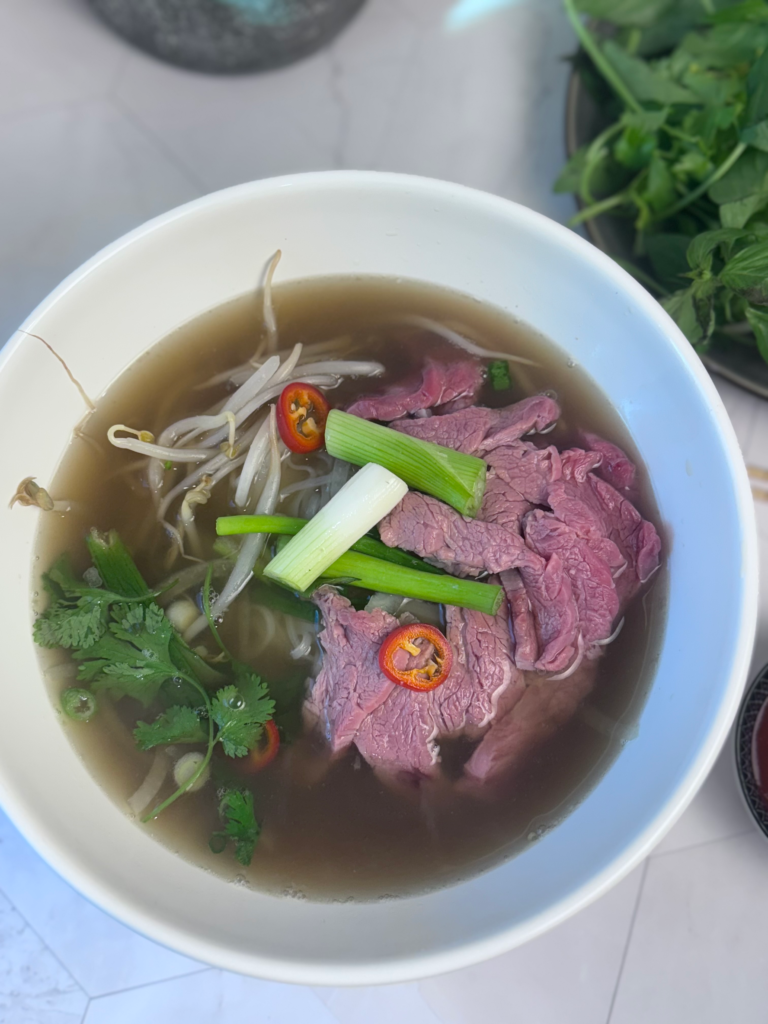
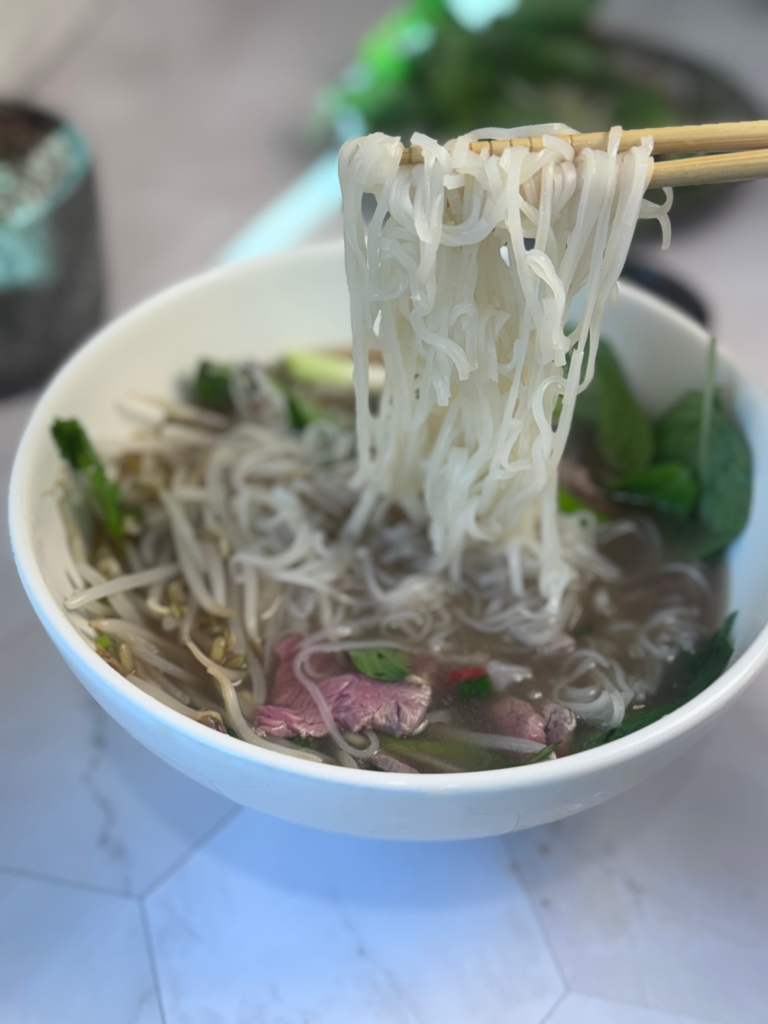
Beef bones, roasted aromatics, and hours of love—it doesn’t get more Vietnamese than this.
We’re kicking off Passport to Soup in the only place I could ever start: Vietnam. Because let’s be honest, you can’t claim to be Vietnamese without having some strong opinions about pho—and I have a lot of them. This soup is practically coded into my DNA.
My mom taught me how to make pho when I was younger, and let’s just say the first time I tried it on my own… it was not great. More like “maybe I’ll just eat cereal instead” level of not great. But now? Now I can make this with my eyes closed, half-asleep, and still get a broth that would make my ancestors proud.
Pho is not a “whip-it-up-on-a-Tuesday” kind of thing. It’s an all-day labor of love. If you’re looking for a shortcut, I do have an Instant Pot version that gets the job done in under 2 hours—but this one? This is the real deal. You’re simmering bones down to pure gelatin and flavor. When your broth jiggles in the fridge like a meat-flavored Jell-O, you’ve done it right.
A Quick Bite of History
Pho didn’t come from a glossy cookbook or a food blog. It came from hardship, resourcefulness, and someone’s Vietnamese grandma making the most of scraps. Born in Northern Vietnam in the early 20th century—probably around Hanoi—pho was originally made with beef bones and rice noodles, inspired in part by French colonial beef stew culture (thanks, colonizers). Over time, it moved south, picked up herbs, hoisin, and bean sprouts, and evolved into the customizable, beloved national dish we know today.
These days, everyone has their own version and their own opinion—and if you’ve ever met a Vietnamese person, you know we’re not exactly shy about voicing those opinions. But one thing we all agree on: real pho takes time, love, and bones. Lots of bones.
Why this Recipe Works
• Charred aromatics like onion and ginger add deep sweetness and complexity.
• Parboiling the bones eliminates scum and impurities for a clean, clear broth.
• Roasted spices like star anise and cloves give that signature pho aroma.
• Long simmer time coaxes every bit of flavor and collagen out of the bones.
• Thin raw beef slices cook instantly when hit with hot broth—zero overcooked meat here.
• Fresh herbs and garnishes add contrast, crunch, and brightness.
Tips for Making Beef Pho
• Don’t skip the parboil. I know it’s annoying. Do it anyway. It keeps your broth clear and beautiful, not cloudy and sad.
• Char those aromatics. A gas stove works best, but the oven will do. Don’t skip this step unless you want bland soup.
• Keep it low and slow. Pho isn’t a boil-and-go soup. Gentle simmer = deep, complex broth.
• Skim the scum. Don’t be lazy. You’re making soup, not a horror film.
• Freeze extra broth. Trust me—you’ll thank yourself later when you’re cold and cranky.
• Use quality beef. Thinly sliced flank steak cooks in the bowl. Don’t use anything tough or stringy.
• Balance the seasoning. Fish sauce, sugar, and salt should not punch you in the face. Taste and adjust like a grown-up.
• Herbs go on after. Don’t boil them in the broth unless you enjoy drinking swamp water.
🌱 A Bite of Sustainability
Pho is the ultimate slow food, and making it from scratch honors every part of the animal—bones, marrow, and all. You’re not tossing anything aside, and your leftovers become next-day soup gold. Freeze extra broth, reuse those herbs, and skip the takeout containers. This kind of cooking may take time, but it’s how you eat well, waste less, and do it all with purpose.
Ingredients & Why They Matter
For the Broth
• Yellow onions (2, unpeeled):Charred for sweetness and depth.
• Fresh ginger (4-inch piece, unpeeled):Charred for its earthy warmth.
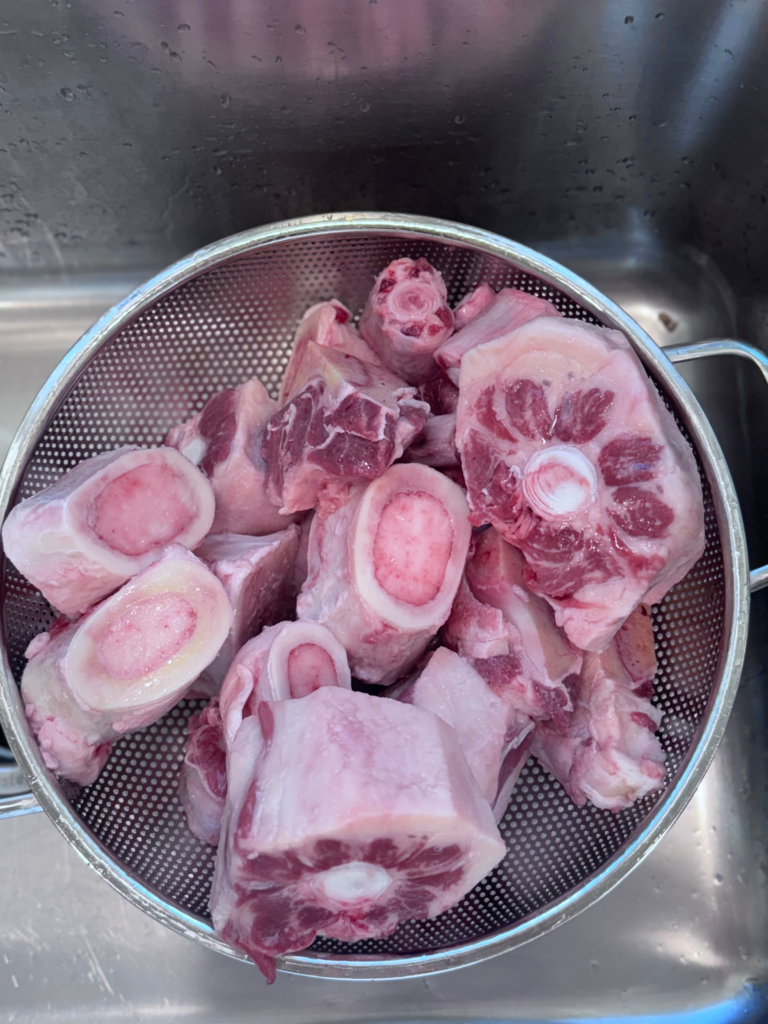
• Beef bones (4 lbs):Knuckle or leg bones with marrow = maximum flavor and collagen.
• Oxtails (2 lbs):Adds body and richness to the broth.
• Water (6 quarts):The foundation—don’t skimp or crowd.
• Star anise (5):Signature licorice note that defines pho.
• Cloves (6):Just enough to round out the spice.
• Cinnamon sticks (2):A warm backdrop.
• Fennel seeds (2 tsp):Adds that little sweet herbaceous lift.
• Salt (1 ½ tbsp):For balance and seasoning.
• Yellow rock sugar (1-inch chunk):Gives pho its subtle sweetness and sheen.
Optional: MSG (see note)
For the Bowls
• Rice noodles (1½–2 lbs):Fresh or dried flat noodles, your choice.
• Flank steak (1 lb):Sliced paper-thin for quick cooking.
• Yellow onion (1, thinly sliced):Soaked in water to mellow its bite.
• Scallions (3–4, sliced):Fresh sharpness.
• Cilantro (⅓ cup, chopped):Adds brightness.
• Black pepper:Just a sprinkle for some heat.
Optional Garnishes
• Mung bean sprouts, Thai basil, cilantro leaves, Thai or serrano chilies, lime wedges, sriracha, hoisin sauce, fish sauce, black pepper:Add what you love. Pho is personal.
How To Make Beef Pho
This authentic Vietnamese Beef Pho (Phở Bò) is rich, aromatic, and deeply nourishing—made from slow-simmered bones, spices, and tender sliced beef.
Char the Aromatics:
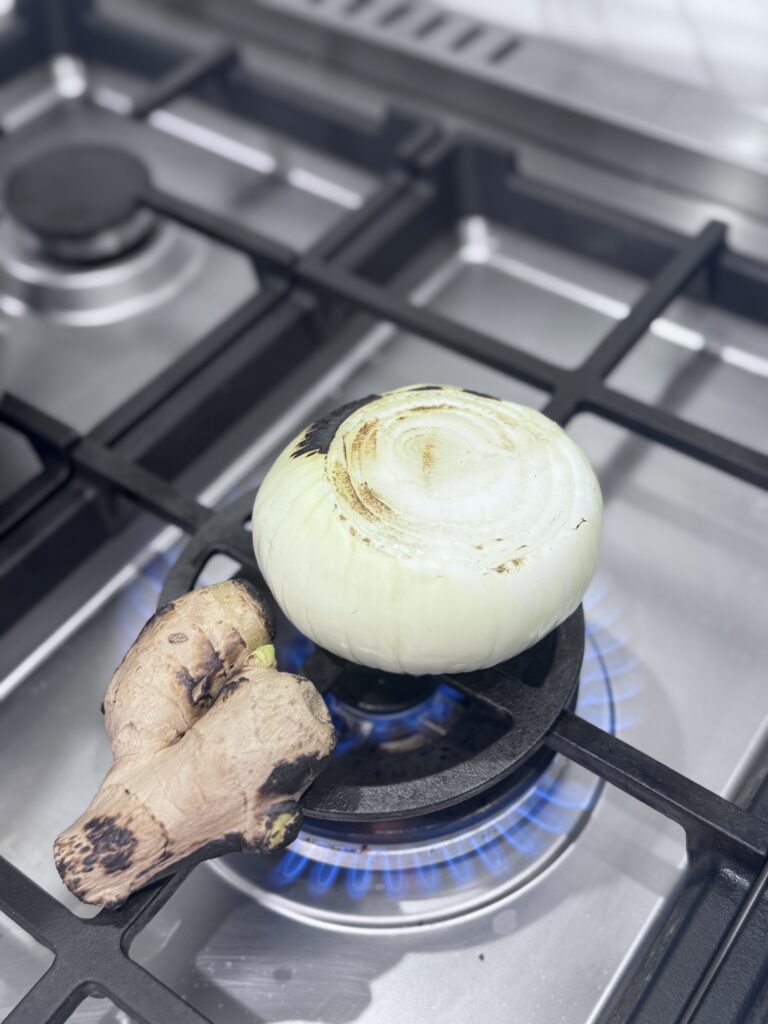
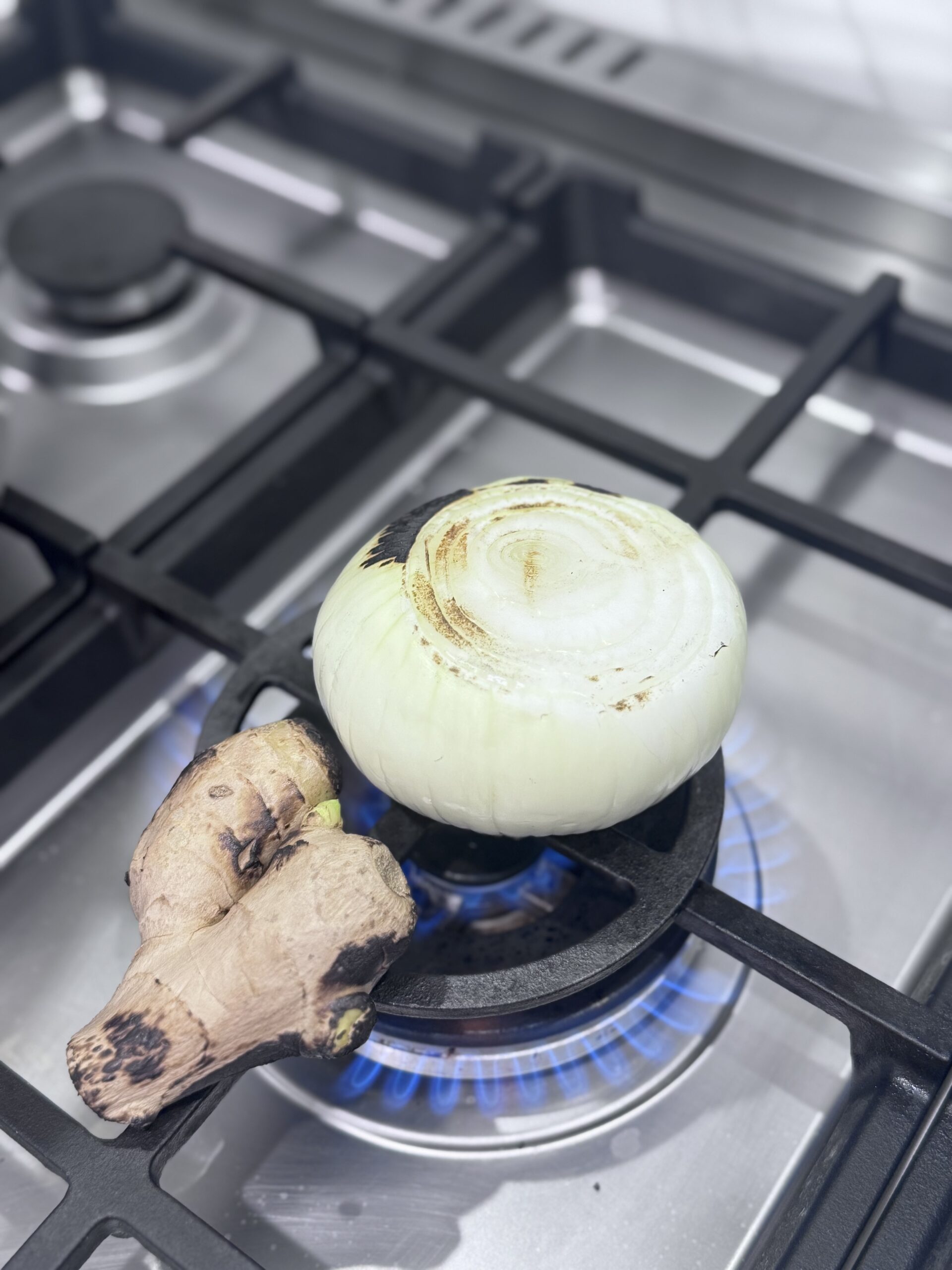
Char onions and ginger directly on a gas stove (or in a 400°F oven wrapped in foil) until the skin is blackened in places, about 15 minutes. Let cool, rinse, peel off the blackened skin, and slightly bruise the ginger.
Parboil the Bones:
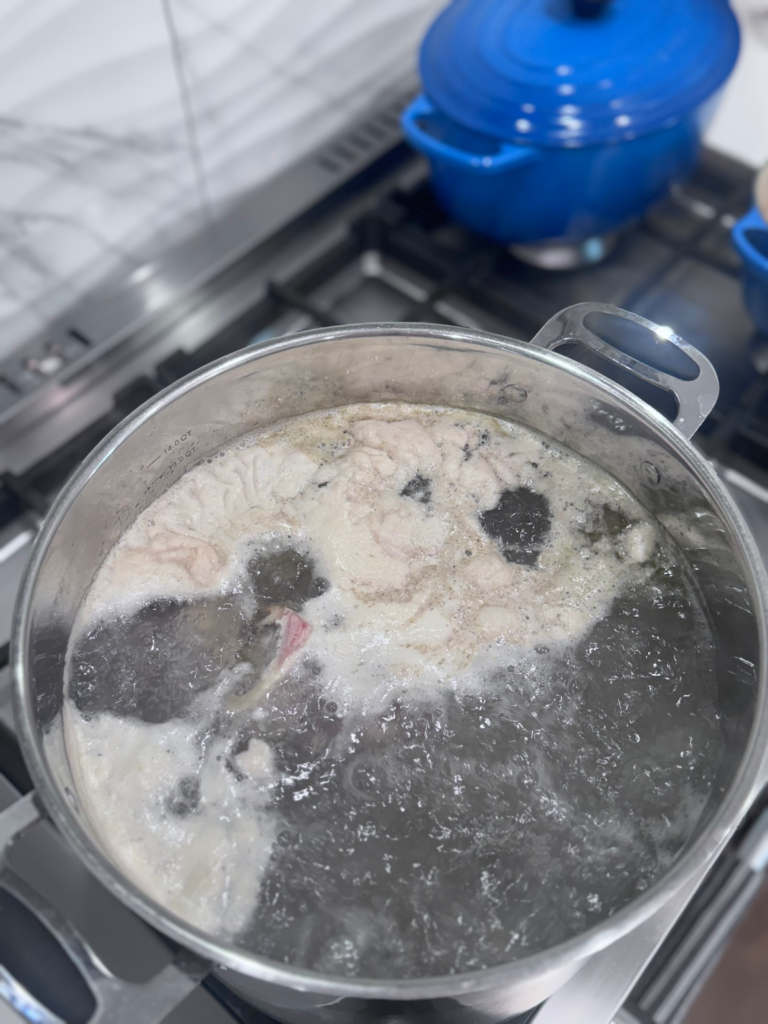
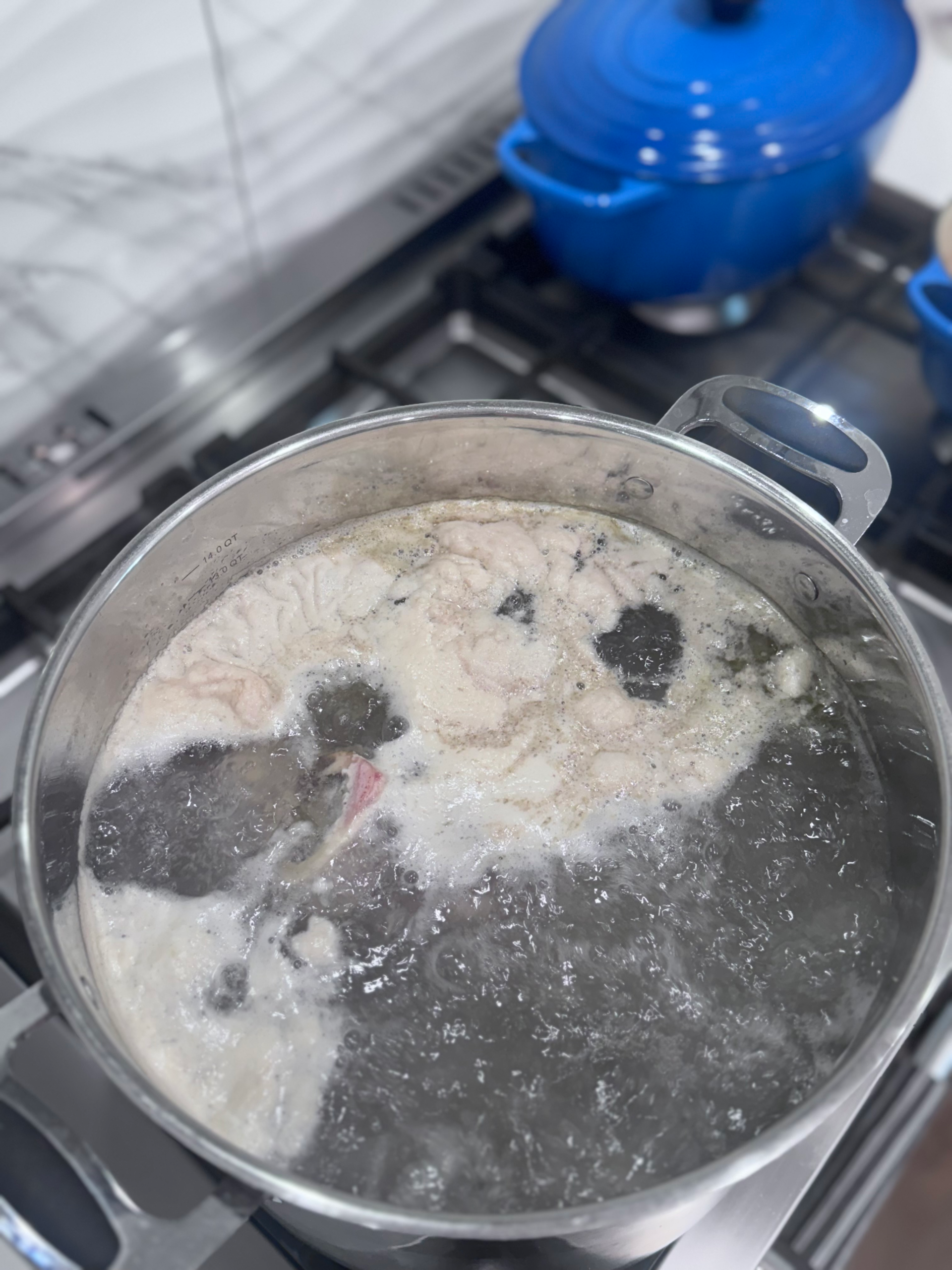
Place bones and oxtail in a pot and cover with cold water. Boil for 5–8 minutes, then drain and rinse bones. Clean out the pot.
Make the Broth:
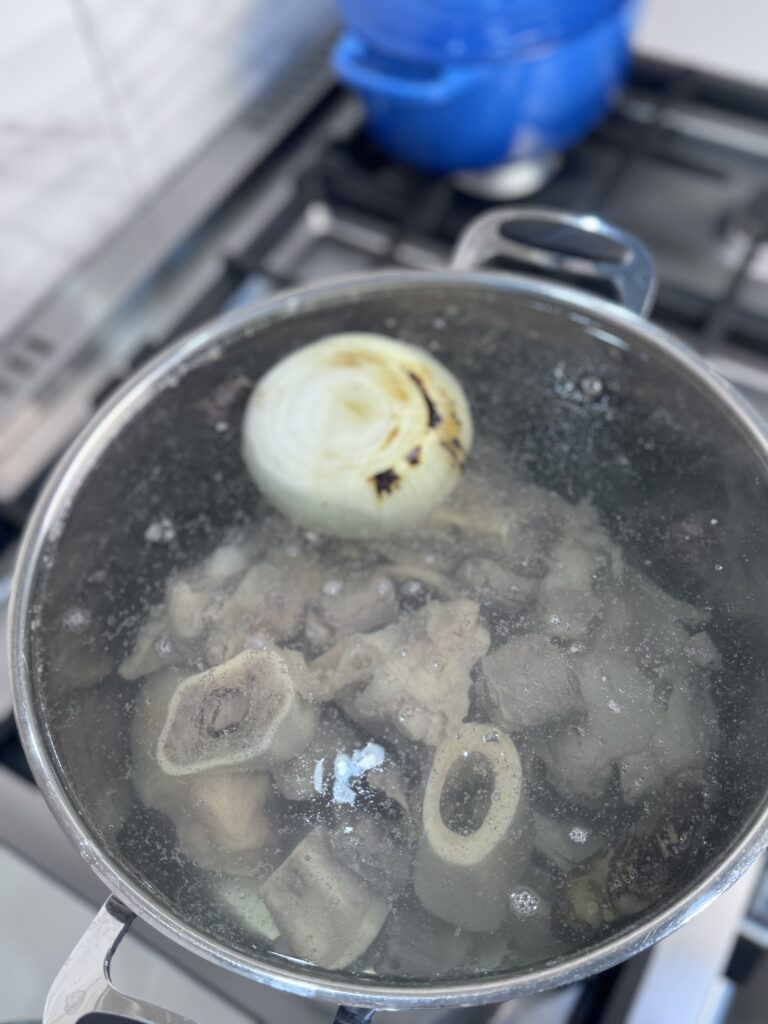
Return the bones to the pot with 6 quarts water. Bring to a boil, reduce to a simmer. Skim off scum. Add charred onions, ginger, salt, and rock sugar. Simmer uncovered for 1½ hours.
Toast the Spices:
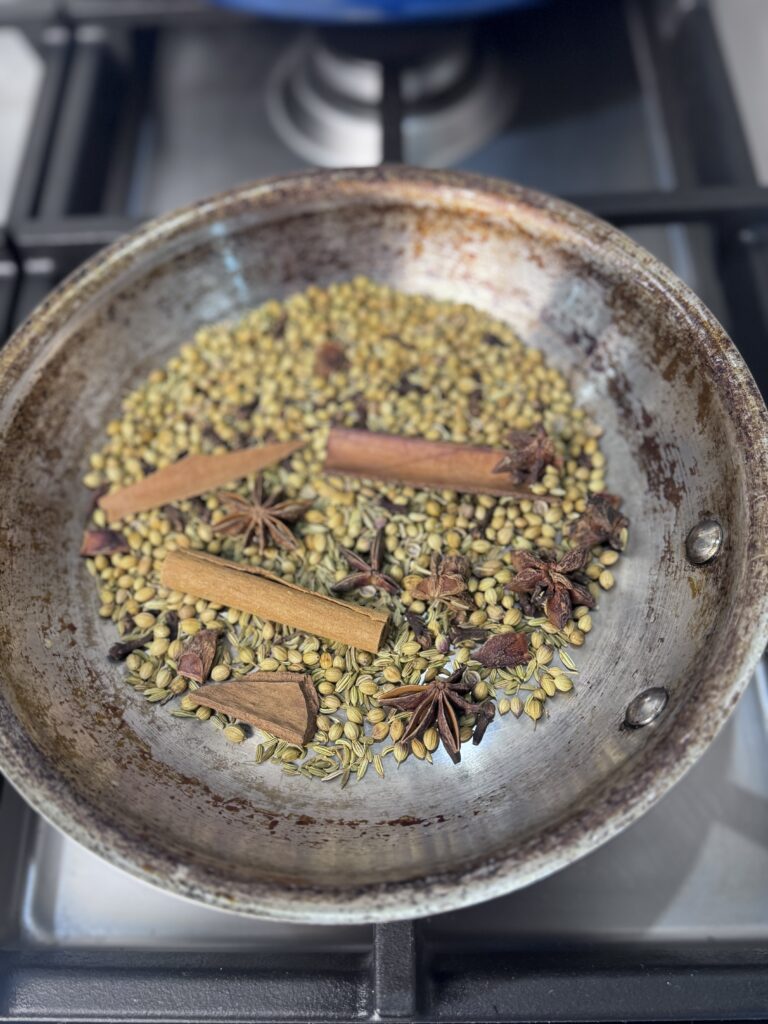
Toast star anise, cloves, cinnamon, and fennel seeds in a dry pan for 2–3 minutes. Wrap in cheesecloth and add to broth. Simmer uncovered for another 3½ hours. Skim occasionally.
Strain and Finish:
Strain broth through fine mesh. Season to taste with extra salt, fish sauce, or sugar if needed. Reheat to boiling before serving.
Assemble the Bowls:
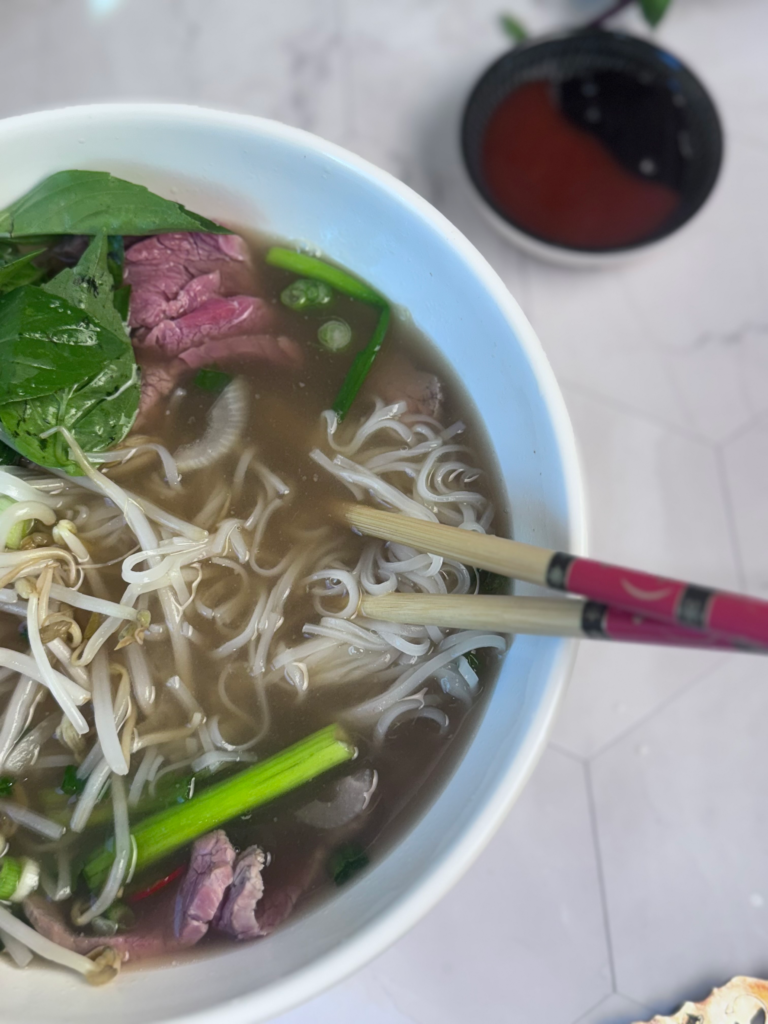
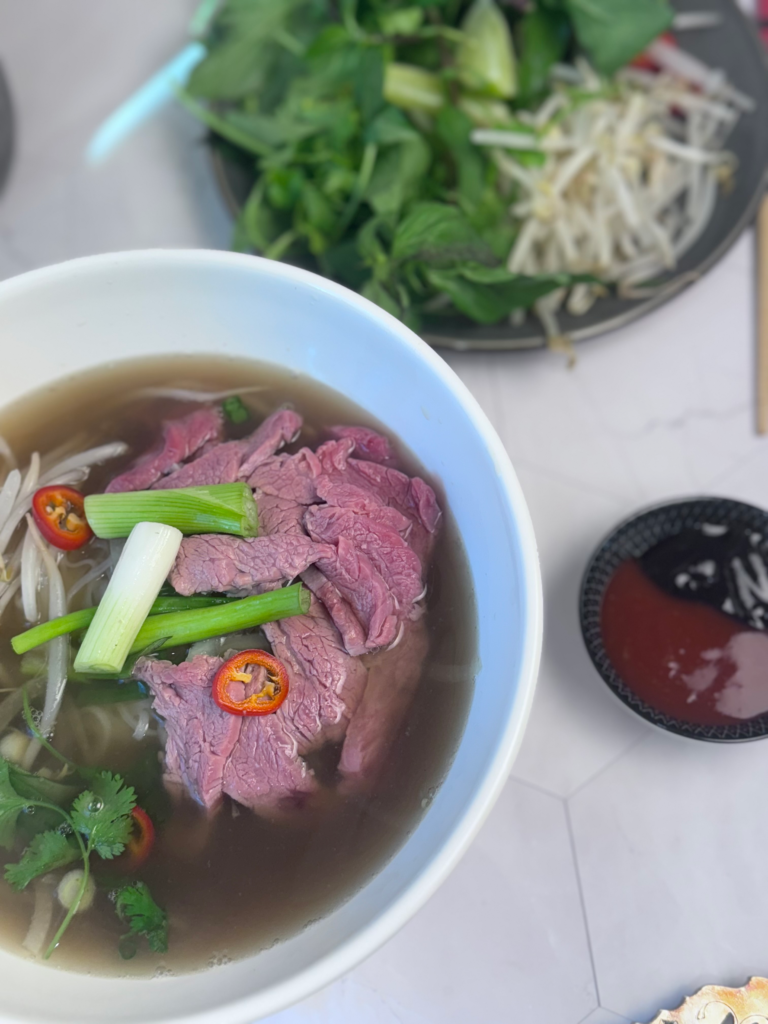
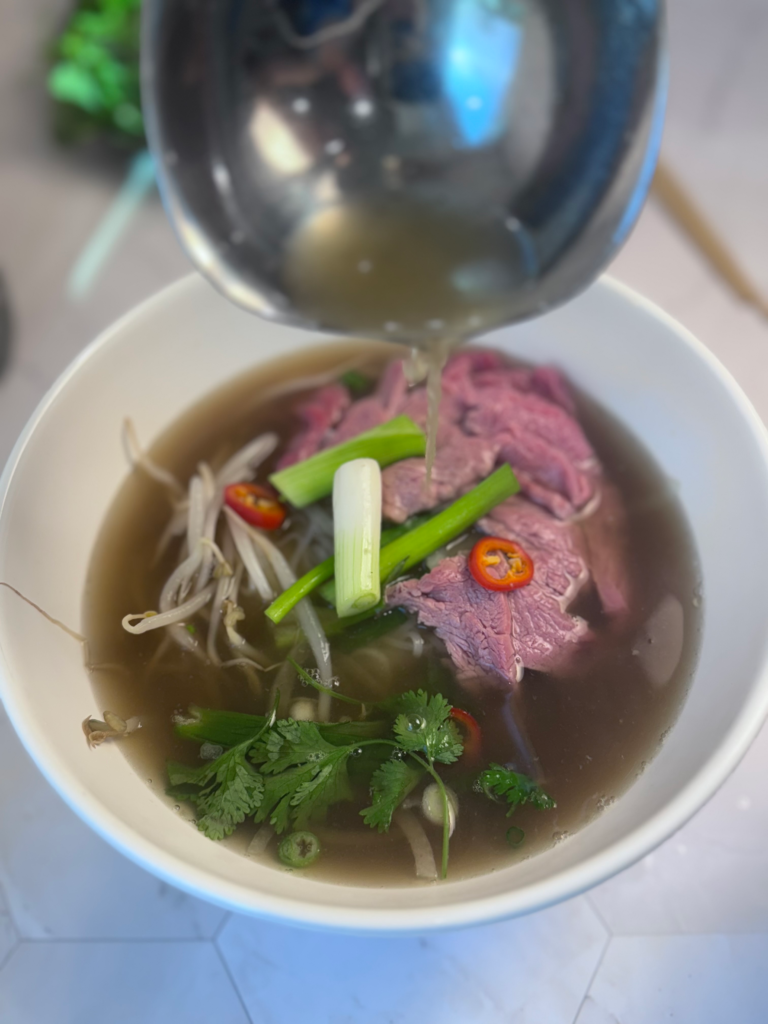
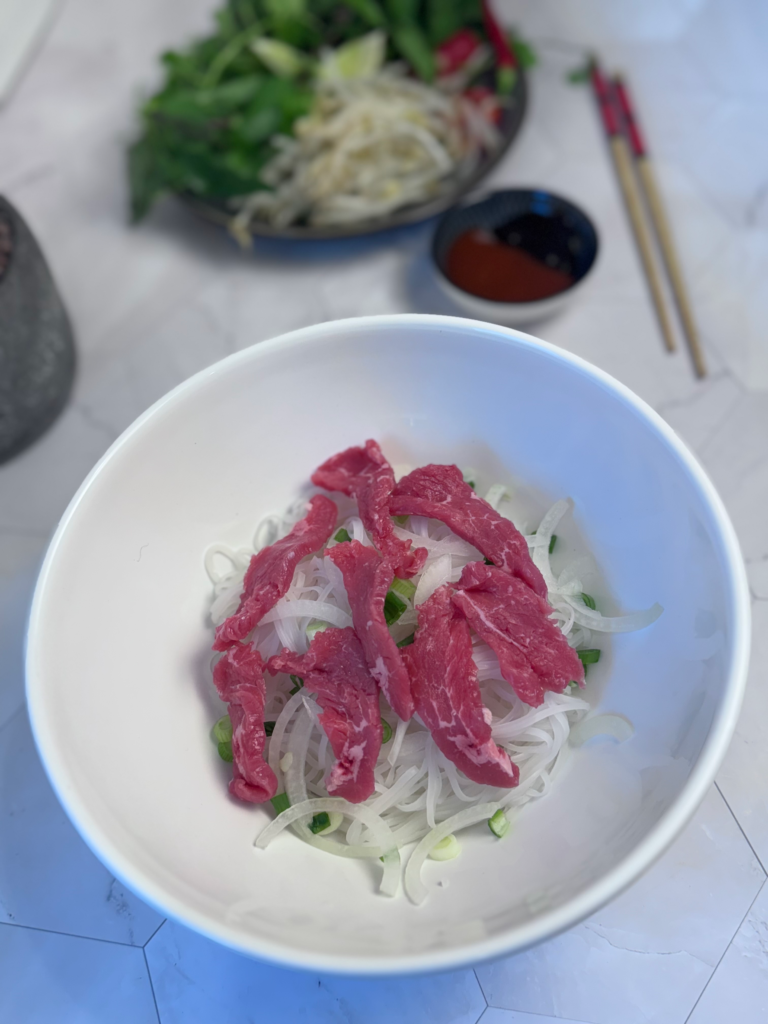
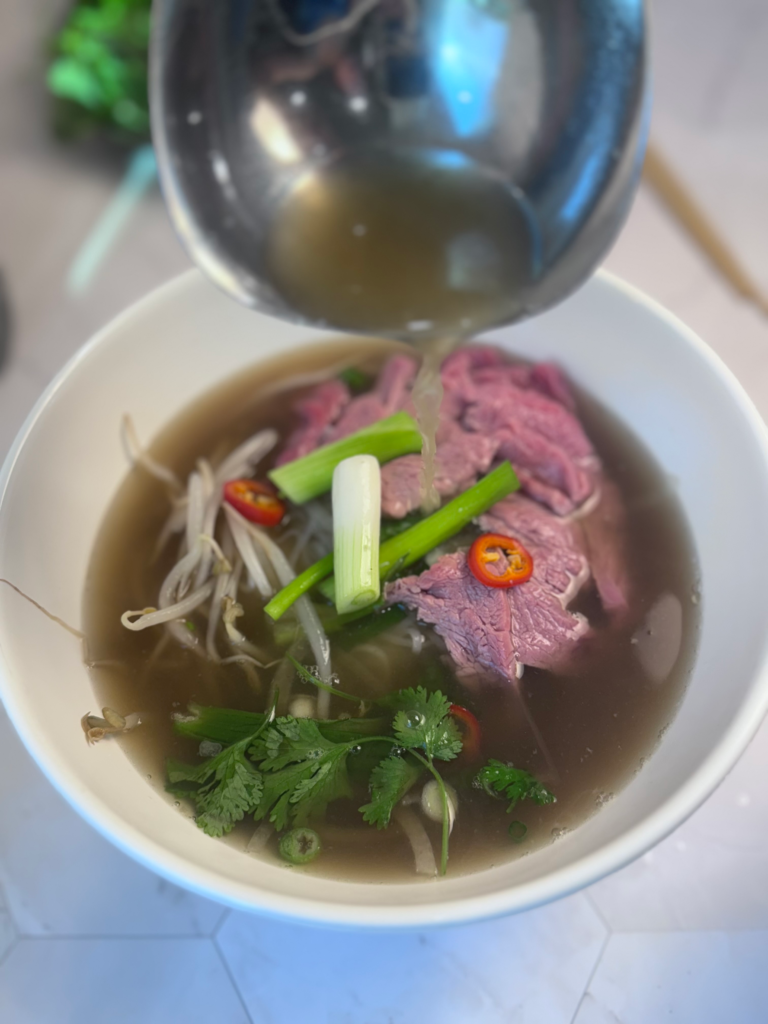
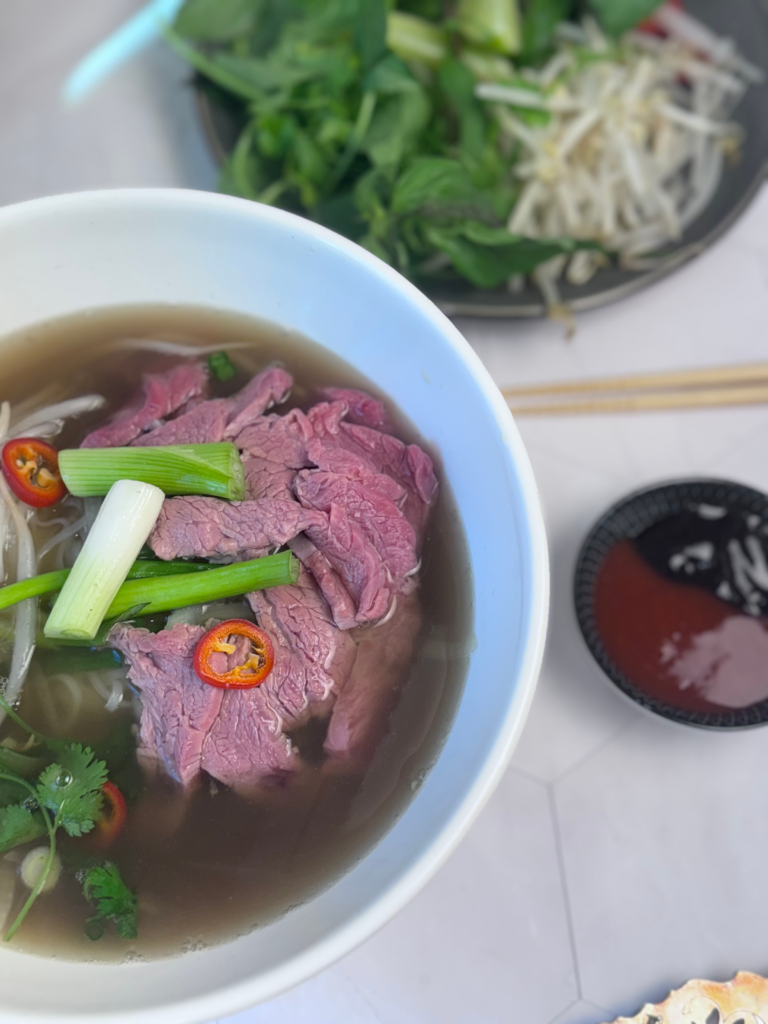
Cook noodles. In each bowl, add noodles, raw beef slices, yellow onion, scallions, cilantro, and black pepper. Ladle boiling broth directly over beef to cook it. Serve immediately with your favorite garnishes.
Soup Series Stamp: Vietnam ✅
Pho isn’t just soup—it’s a whole lifestyle. One that starts with patience, ends with a full stomach, and leaves your entire kitchen smelling like something worth waiting for. Stay tuned as we head to the next stop on our Passport to Soup tour. If you make it, tag me on Instagram @the.sustainable.kitchen—I want to see your shrimp swagger. Next up: Greece, and yes, it involves eggs and lemons.
This authentic Vietnamese Beef Pho (Phở Bò) is rich, aromatic, and deeply nourishing—made from slow-simmered bones, spices, and tender sliced beef.
Ingredients
For the Broth
2 yellow onions, unpeeled
1 4-inch piece fresh ginger, unpeeled
4lbs beef bones (knuckle or leg, with marrow)
2lbs ox tails
6quarts water
5 star anise
6 whole cloves
2 cinnamon sticks
2tsp fennel seeds
1 1/2tbs salt
1 1-inch chunk yellow rock sugar
1tsp MSG (optional, see note)
For the Bowls
1 1/2-2lbs small flat rice noodles, dried or fresh
1lb flank steak, thinly sliced
1 yellow onion, sliced paper thin, soaked in cold water to cover for 30 minutes and drained
3-4 scallions, thinly sliced
1/3cup chopped fresh cilantro, leafy tops only
black pepper
Optional Garnishes
3cups mung bean sprouts
2bunch Thai basil leaves
12-15 fresh cilantro leaves
2-3 Thai or serrano chiles, thinly sliced
2-3 limes, cut into wedges
sriracha
hoisin sauce
fish sauce
freshly ground black pepper
How To Make Beef Pho
1
Char the Aromatics
Place the onion and ginger directly on the cooking grate of a gas stove over a medium flame. If you do not have a gas stove, wrap the ginger and onion in foil and roast in oven at 400°F for 15 minutes. Let the skin burn, using tongs to rotate the onions and ginger occasionally. After 15 minutes, the onion and ginger will have softened slightly and become sweetly fragrant. You do not have to blacken the entire surface. Remove from heat and let cool.
Rinse the cooked onion and ginger under warm running water, rubbing off the charred skin. Trim off and discard the blackened root and stem ends. Using a spoon, scrape off the ginger's skin, and cut in half. Slightly bruise the ginger with the broad side of a cleaver. Set aside.
1 ginger, 1 onion
2
Parboil the Bones
Put the beef bones and ox tails in a large pot and add cold water just to cover. Bring to a boil over high heat and boil vigorously for 5-8 minutes to release impurities. Dump the bones in a colander and rinse the bones and ox tails to wash off any residue, using your fingers to clean each piece. Clean the pot and return the bones to the pot.
4 lbs beef bones, 2 lbs ox tails
3
Cook the Broth
Pour in 6 quart water, bring to a boil over high heat, and lower the heat to a gentle simmer. Use a ladle or a skimmer, skim off any scum that rises to the top. Add the onions, ginger, salt, and rock sugar and cooked, uncovered, for 1 1/2 hours.
6 qt water, beef bones and ox tails, charred ginger and onion, 1 1 /2 tbs salt, 1-inch chunk rock sugar
4
Toast the Spices
In a small skillet over low heat, toast the spices 2-3 minutes until fragrant. Remove from skillet and put in a piece of cheesecloth. Add to stock. Continue to simmer, skimming any scum that rises to surface, for 3 1/2 hours more. Make sure to maintain a low simmer.
Strain the broth through a fine mesh sieve positioned over a pot. Discard any remaining solids. Taste and adjust the flavor with salt, fish sauce, and rock sugar. Bring the broth to a simmer over medium heat as you assemble bowls.
6
Assemble the Bowls
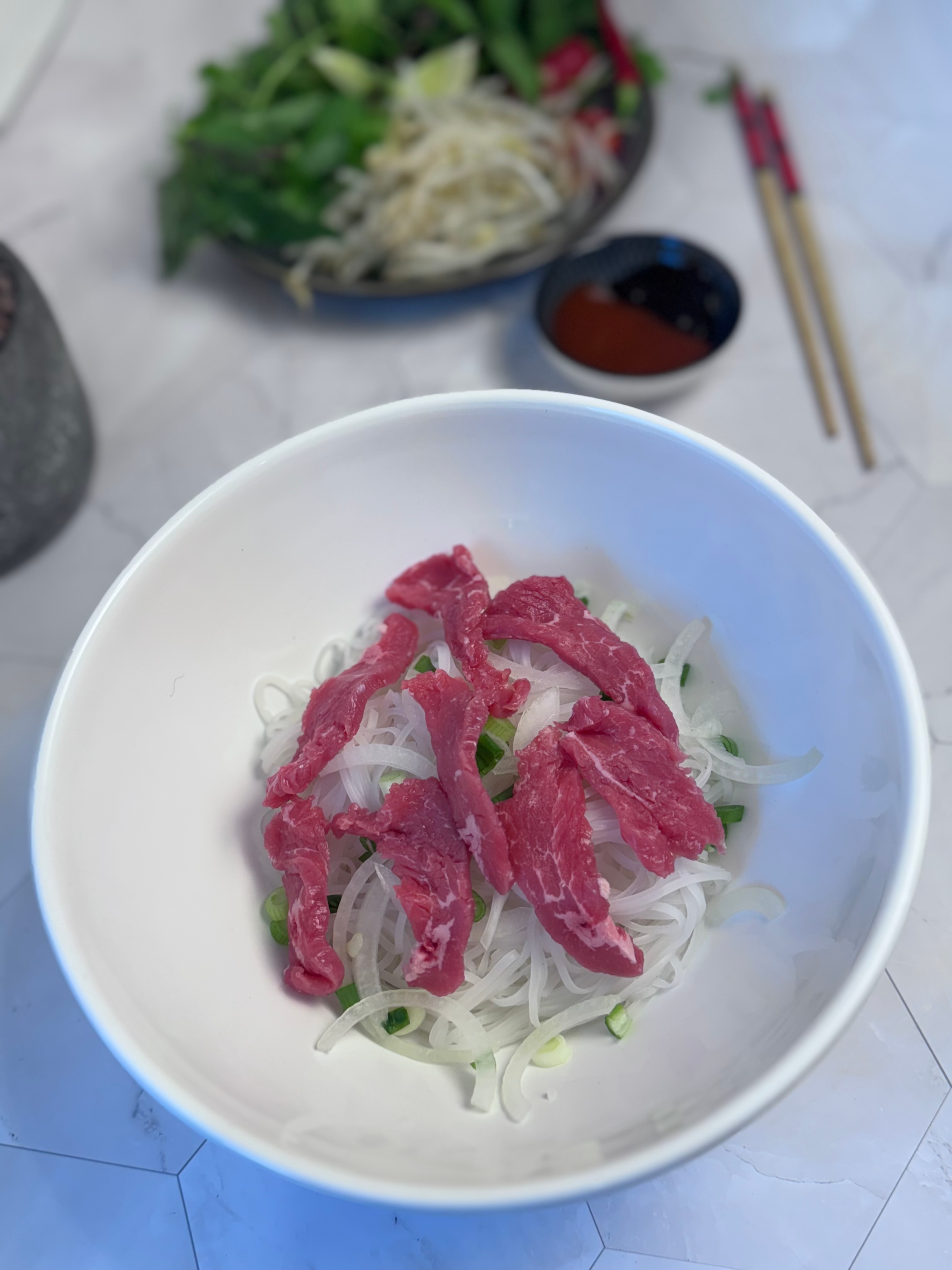
Cook noodles according to package instructions. To the bowls a portion of noodles. Top with raw flank steak, arranging the slices flat. Place a mound of yellow onion in the center and a sprinkle of scallions and cilantro on top. Finish with a sprinkle of pepper.
Raise the heat and bring the broth to a roiling boil. Ladle the hot broth over the bowl, distributing the hot liquid evenly over the steak to cook. Serve with garnishes.
noodles, cooked broth, flank steak
Nutritional Value
Servings 8
Serving Size 1
Amount Per Serving
Calories495kcal
% Daily Value *
Total Fat16g25%
Saturated Fat7g35%
Trans Fat0.2g
Cholesterol105mg35%
Sodium890mg38%
Potassium580mg17%
Total Carbohydrate50g17%
Dietary Fiber3g12%
Sugars4g
Protein38g76%
Vitamin A 1050 IU
Vitamin C 5 mg
Calcium 75 mg
Iron 5.2 mg
* Percent Daily Values are based on a 2,000 calorie diet. Your daily value may be higher or lower depending on your calorie needs.
Note
To achieve a clear broth, you must first parboil and rinse the beef bones.
One of the keys to a great broth is good leg bones, which are often sold at supermarkets as beef soup bones. Avoid using neck bones; instead, look for soup bones made of knuckle and leg bones that contain marrow
For the most fragrant and flavorful broth, use bones of grass-fed or natural beef
Have your butcher slice the beef ; it needs to be paper think, and if you do it at home, it probably won't be.
Note about MSG: I add 1 tsp of MSG to the broth for my best version of pho. Before you panic: the FDA classifies MSG as “generally recognized as safe,” and several reviews conclude that typical dietary amounts show no clear evidence of long‑term harm. MSG is simply the sodium salt of glutamate—an amino acid your body already produces, and reactors to naturally found in foods like tomatoes and cheese. If you’re among the tiny subset of people who react to large doses on an empty stomach, you might want to skip it. But for most of us? It just helps make good broth great.