

Welcome Back to Unfunk Your Fear
It’s tender, spicy-sweet, and deeply savory. This Vietnamese Beef Stew is here to prove that fish sauce isn’t scary—it’s the hero of your next comfort meal.

Welcome back to my Unfunk Your Fear series—where I gently coax you into the bold, briny world of fish sauce without making you run for the hills. Today’s feature: Bò Kho, or Vietnamese Beef Stew.
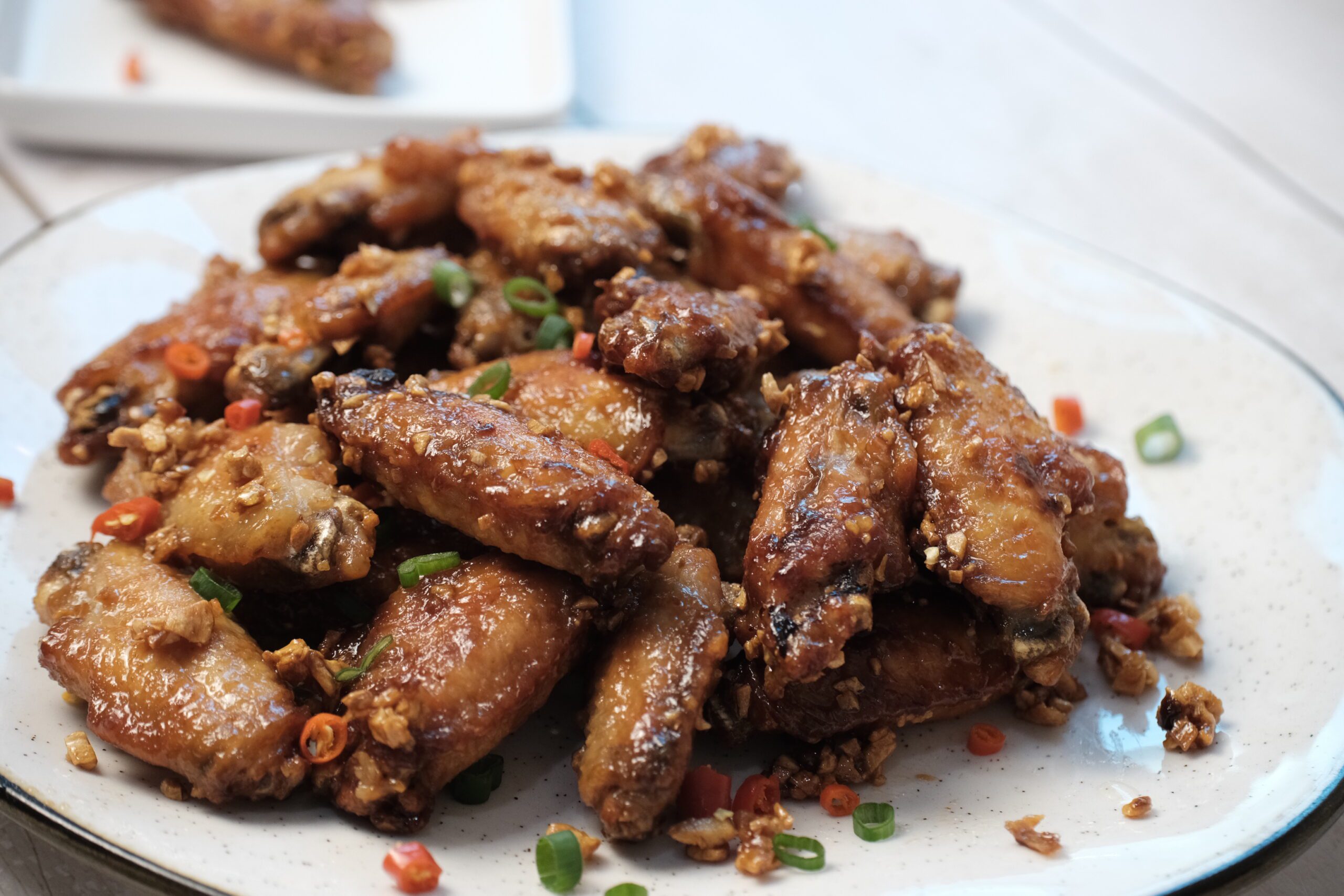



Now, I know every culture has their own version of beef stew. But—bias fully activated—I personally think ours reigns supreme. It’s got depth, it’s got heat, it’s got spices like star anise, Chinese five-spice, and cinnamon. But more than that? It has personality.

Yes, I know I’m usually a “noods forever” kind of person. But Bò Kho? I prefer it with crusty, toasted baguette. There’s nothing like dragging a torn hunk of bread through that deep, brick-red broth—soaking up every drop like a soup sponge from heaven. And to make it even more special, I made my homemade baguette. Now that is what I call winning!


Why this Recipe Works
• Fish sauce is the MVP – Not scary. Just savory.
• Slow-cooked beef chuck – Melts in your mouth after simmering in aromatics.
• Five-spice, star anise, and lemongrass – Elevate this beyond your average stew.
• Coconut water in the broth – Adds natural sweetness and balance.
• Baguette pairing – Optional…but like, not really.

Tips for Making Vietnamese Beef Stew (Bo Kho)
• Marinate your beef: The 30-minute marinate gives the meat a head start on flavor.
• Don’t skip the browning step: That caramelized crust equals flavor bombs in your pot.
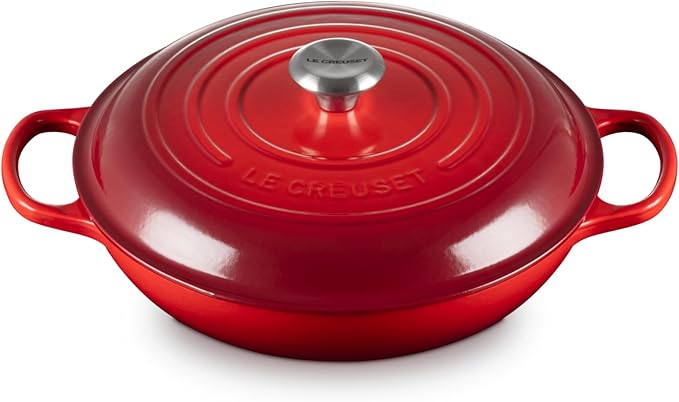
• Use a Dutch oven or deep braiser: You want even heat and enough room for the stock.
• Coconut water vs water: Coconut water brings subtle sweetness that rounds out the salt and spice.
• Final fish sauce adjustment: Always taste at the end—fish sauce is your seasoning finisher.

🌱 A Greener Bite of Sustainability
Fish sauce may be small in quantity, but it packs an eco-conscious punch—delivering deep umami without requiring heavy meat reductions or bouillon cubes. By choosing daikon and carrots—two hearty, low-impact veggies—you’re cooking seasonally and sustainably. And coconut water? It’s a great natural swap for added sweetness without refined sugar.
Buying a crusty baguette instead of serving with noodles also helps cut down on water-intensive grain cooking. Less boiling, more bread-dipping. A win-win.

Ingredients & Why They Matter
For the Marinade:
• Beef chuck (2 lbs): Fatty, well-marbled, and ideal for long braising.
• Fish sauce (2 tbsp): Delivers savory, fermented depth—your secret weapon.
• Chinese five-spice (1 tbsp): Adds warmth from cloves, cinnamon, fennel, and star anise.
• Black pepper (1 tsp): A hint of heat to balance the sweet spices.
• Brown sugar (1 tbsp): Adds molasses undertones and helps caramelize the beef.
• Garlic (4 cloves): Classic savory backbone for marinades.
For the Base:
• Avocado oil (2–3 tbsp): Neutral and high-smoke point—ideal for browning.
• Onion (1 large): Sweetens and deepens the broth as it cooks down.
• Ginger (3 tbsp): Bright, spicy warmth that complements the beef.
• Lemongrass (2 stalks): Herbal citrus notes that are signature to Bò Kho.
• Star anise (2): Fragrant, licorice-like warmth—absolutely essential.
• Bay leaf (1): Earthy aroma that rounds out the stew.
• Tomato paste (3 tbsp): Adds body and sweetness. Toasting it enhances depth.
• Cinnamon stick or powder (1 tsp): Sweet, woody spice that elevates the stew’s aroma.
• Thai chilis (1–2): Optional—but add a sharp kick if you like heat.
• MSG (1 tsp, optional): Boosts umami. Totally optional.
• Beef stock (4 cups): Your flavor foundation—rich and beefy.
• Coconut water (1 cup): Natural sweetness and electrolytes that mellow the spices.
• Carrots (2 large): Sweet and tender after simmering.
• Daikon (1 large): A mild radish that absorbs all that flavor.
For Finishing:
• Cilantro or Thai basil: Adds brightness and a final herbal note.
• Lime wedges: Acidity cuts through the richness.
• Crusty baguette: The MVP of sopping up stew.
How To Make Vietnamese Beef Stew (Bo Kho)
Vietnamese Bò Kho is the ultimate beef stew—bold, aromatic, and deeply savory thanks to fish sauce, five-spice, and lemongrass. Crusty baguette required.
Marinate the Beef:
In a bowl, toss beef with fish sauce, five-spice, pepper, sugar, and garlic. Marinate 30 min at room temp (or up to 2 hrs in fridge).

Brown the Beef:
Heat oil in a Dutch oven. Brown beef in batches on all sides. Set aside.

Build the Aromatic Base:
Sauté onion 3–4 minutes until translucent. Add ginger, garlic, and lemongrass. Stir 2 mins. Push aside and toast tomato paste 2 mins.

Add Spices & Liquid:
Add star anise, bay leaf, cinnamon, and chilis. Return beef to pot. Pour in stock and coconut water. Bring to boil. Cover partially, reduce heat, and simmer 1 hour.

Add Vegetables:
Add carrots and daikon. Simmer uncovered 30–45 mins until beef is fall-apart tender. Season with fish sauce to finish. Add a pinch of sugar if needed. Finish with lime and herbs before serving.

A Bowl Above the Rest
This stew doesn’t just warm your bones—it flips the script on what beef stew can be. Rich, fragrant, and fiercely flavorful, Vietnamese Bò Kho is what happens when you trust your pantry and unfunk your fear. One spoonful and you’ll never look at fish sauce the same way again.

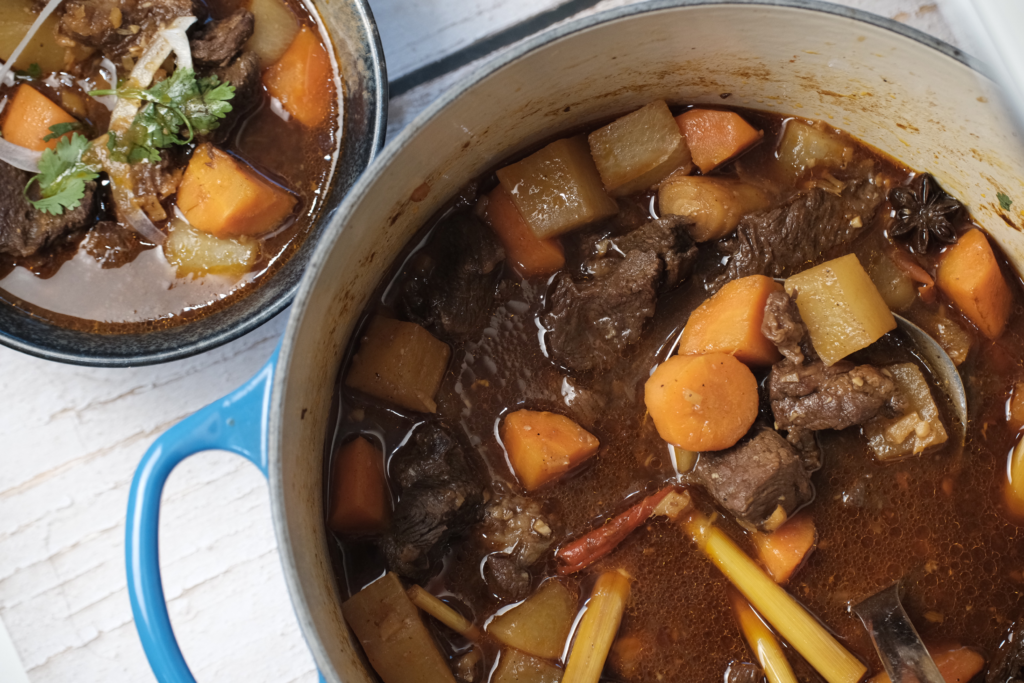
Vietnamese Beef Stew (Bo Kho)
Description
Vietnamese Bò Kho is the ultimate beef stew—bold, aromatic, and deeply savory thanks to fish sauce, five-spice, and lemongrass. Crusty baguette required.
Ingredients
For the Beef Marinade
For Browning and Base
For Aromatics and Braise
For Finishing
How to Make Vietnamese Beef Stew (Bo Kho)
-
Marinate the Beef
In a large bowl, combine chunks of beef with fish sauce, five‑spice powder, black pepper, brown sugar, and minced garlic. Mix well so every piece is coated.
Rest: 30 min at room temp (or up to 2 hrs in fridge).
2-3 tbs avocado oil, 2 lbs beef, 2 tbs fish sauce, 1 tbs five spice powder, 1 tsp black pepper, 1 tbs light brown sugar, 4 cloves garlic -
Build the Aromatic Base
Turn heat to medium. In the same pot, add onion and sauté ~3 min until fragrant and translucent. Add ginger, garlic, and bruised lemongrass — stir 1–2 min. Push aromatics to the side and add tomato paste — toast into the vegetables 2 min (this moves it from “tin can” taste to rich braise base).
1 yellow onion, 3 tbs fresh ginger, 2 stalks lemongrass, 3 tbs tomato paste -
Add Spices and Liquids
Stir in star anise, bay leaf, cinnamon, and Thai chilies. Add MSG if using. Return browned beef to pot. Pour in beef stock and coconut water. Scrape up any browned bits — that’s flavor. Bring to a low boil, then reduce heat to low. Cover slightly ajar and simmer 1 hr.
2 star anise, 1 bay leaf, 1 cinnamon stick, 2 Thai chilis, MSG (optional), 4 cups beef stock, 1 cup coconut water -
Add Vegetables
Add carrot and daikon chunks. Continue simmering (uncovered if you want thicker sauce) 30–45 min until beef is fork‑tender and rich in flavor.
2 carrots, 1 daikon -
Taste and Adjust
Fish sauce is your final seasoning tool. If it tastes flat or too mild, add:
•1–2 tsp fish sauce (taste after each)
•A pinch of sugar if needed for balance
Lime or lemon squeeze adds brightness just before serving.


Equipment

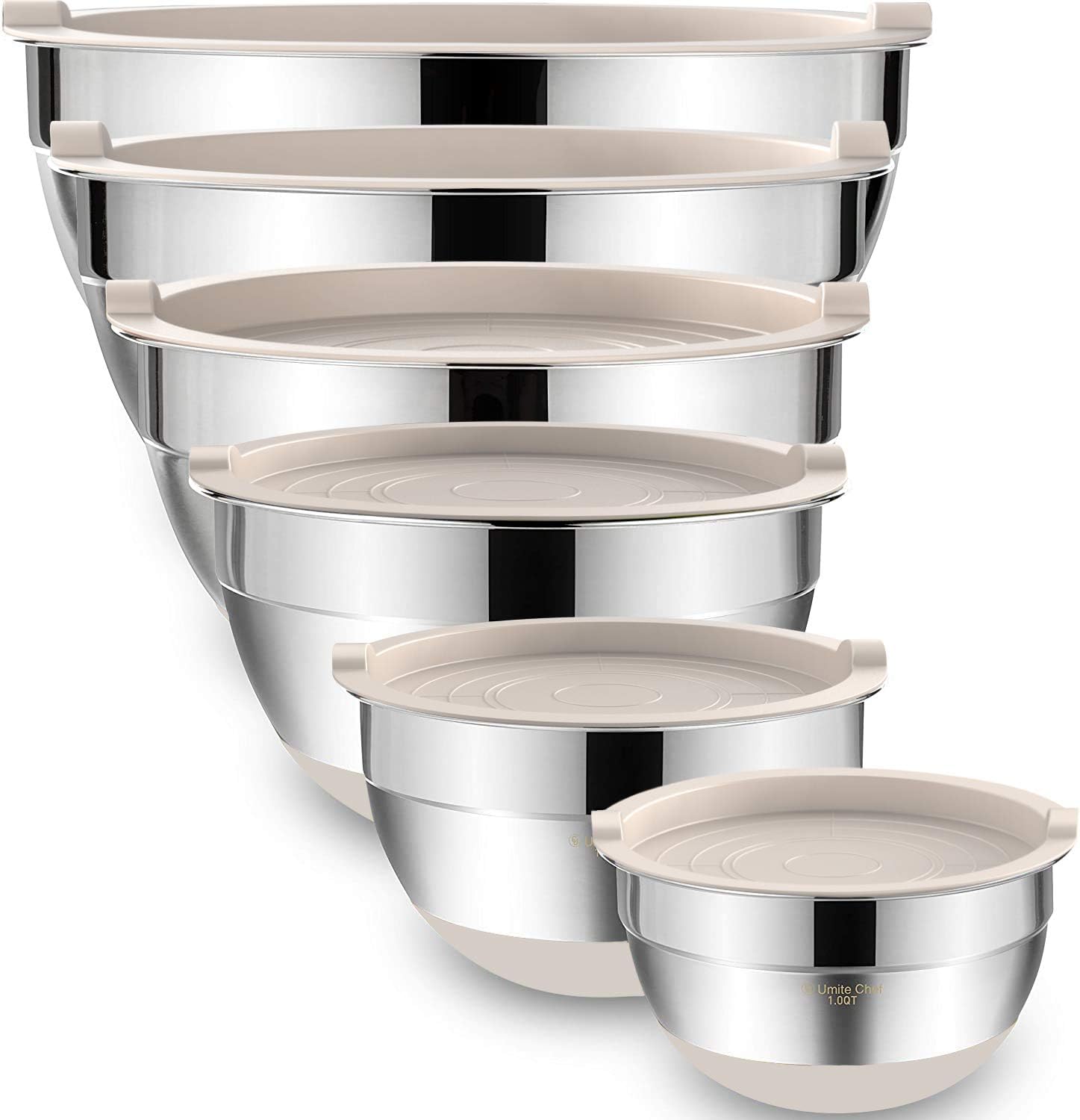
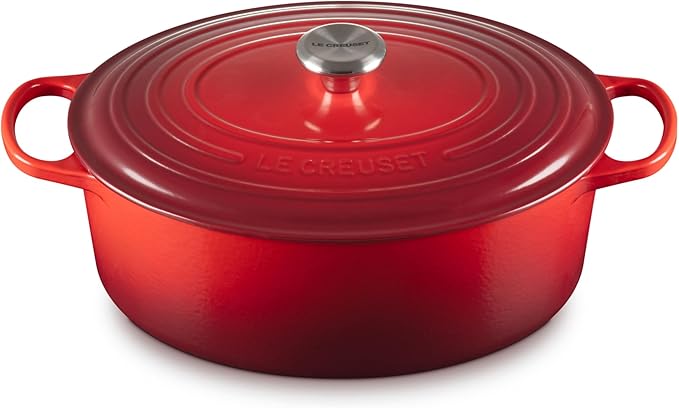
Affiliate Disclosure: This post contains Amazon affiliate links, i.e., when you buy any product using the links below, we get commissions. but it doesn’t cost you anything extra. If you do purchase any product using the given links, we thank you in advance!
Nutritional Value
Nutritional Value
Servings 8
Serving Size 1
- Amount Per Serving
- Calories 247kcal
- % Daily Value *
- Total Fat 15g24%
- Saturated Fat 5.5g28%
- Cholesterol 57.5mg20%
- Sodium 630mg27%
- Potassium 590mg17%
- Total Carbohydrate 9g3%
- Dietary Fiber 1.5g6%
- Sugars 3g
- Protein 20g40%
- Vitamin A 440 IU
- Vitamin C 4.5 mg
- Calcium 40 mg
- Iron 2.7 mg
* Percent Daily Values are based on a 2,000 calorie diet. Your daily value may be higher or lower depending on your calorie needs.
Note
Reader-Tested Notes for Gochujang Caramel Cookies
Use thick, traditional gochujang paste — not sauce.For the signature red swirls to shine and hold their shape, stick with a classic, thick gochujang paste (like Sempio’s). Sauce-style gochujang (the kind in squeeze bottles) tends to be too loose and can make the cookies spread too much or blend the flavors too thinly.
Mix the dough by hand when adding the caramel.
To keep those beautiful gochujang streaks intact, don’t overmix once the caramel swirl goes in. Use a spatula or spoon to gently swirl the paste into the dough in wide folds. A stand mixer will overwork the dough and blend the colors into one muddy shade, rather than creating contrast.
Chill the dough before baking.
A short chill helps firm up the dough just enough to scoop and shape without stickiness, and it also helps keep the cookies thick and chewy in the oven.